Research
Research
One of the three pillars of ReDUCE is research. Research projects take 3 to 5 years and deliver a knowledge product.
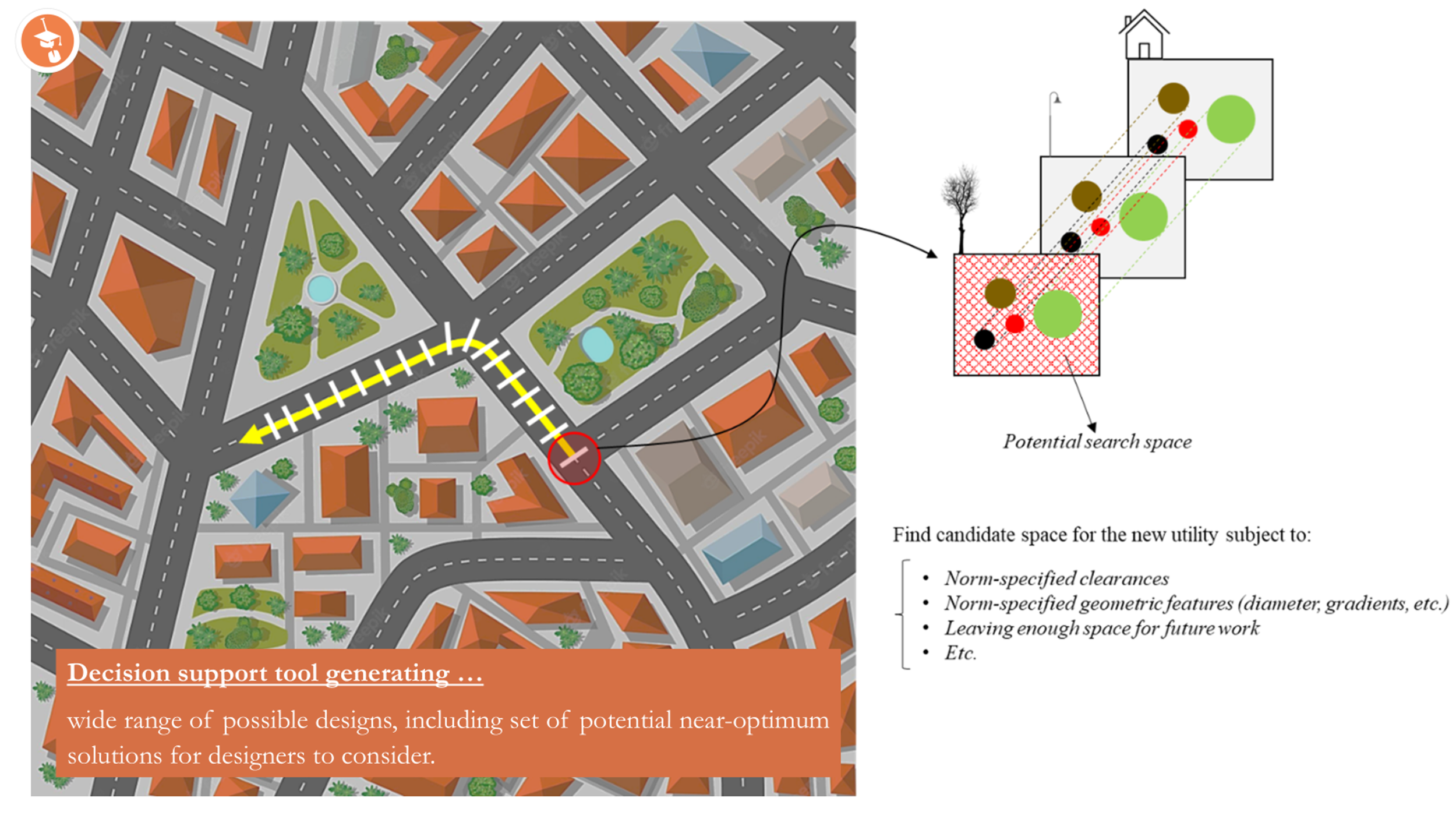
While the subsurface, to date, lacks clear ordering principles and design rules, there is an increasing need to more systematically plan infrastructures in the buried shallow subsurface space. This project will explore how existing (often implicit) rule sets can be integrated in a design algorithm that supports further automated and more systematic design of cables and pipes in urban undergrounds.
This project aimed to support the detection of risky excavation operations based on historical datasets of damages in the Netherlands. Jiarong Li developed, using XGBoost, a data-driven model that predicted the likelihood of damage occurring in an excavation polygon. The Dutch agency Kadaster uses such polygons to exchange data on utility locations between network owners and excavator operators.
The machine learning model had a satisfactory performance with an AUC-ROC score of 0.821 and a balanced accuracy of 0.743.
To scale up city district heating construction projects, processes need to be developed and reliable. Currently teams largely rely on experience and improvisation, making them skilled in troubleshooting, but less efficient in planning and anticipating disruptions. This thesis has explored anticipation and containment through the lens of HRO
Traditionally, sewer inspections are conducted by direct access to the pipes, and where possible by visual inspections. In addition to being a tedious and cumbersome job, visual inspections do not always deliver the desired results. In the TISCALI project, research is being done to more efficient and less error prone inspection methods.
In the project IMKL 2.0, four showcases have been developed to show how the data that is gathered according to the new IMKL2.1 protocol can be used for visualising uncertainties and risks.
Other research projects
2020 - 2022: Effectiveness of Pipeline Safety Systems
2019 - heden: Neighborhood Approach Energy Transition
2018 - 2019: Sewer collapse RIONED
2016: Review detection Technologies
2012 - 2020: Coordination of Inner City Construction Projects
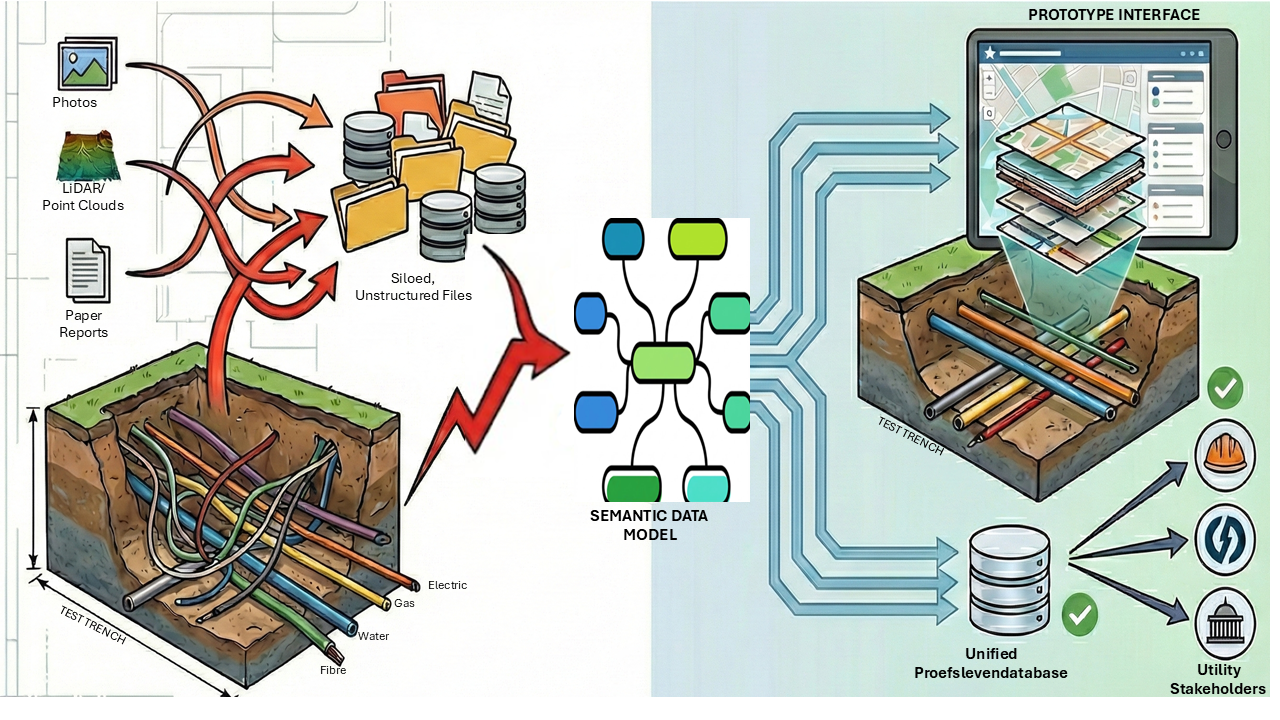
Trial trenches are dug to verify the registered location information of buried cables and pipelines. While findings from trenching activities are stores, there is no systematic registration. This project develops a standard for storing the types of 3D data that can be captures, using modern capture and data management approaches